Sunday, August 17, 2014

Book 14 -- Black Coffee by Agatha Christie

My first repeat author! Fun fact: this is a novelization of a play by the same name, also by Christie.


Context:

An urgent phone call from renowned scientist Sir Claud Amory sends Hercule Poirot packing to London. However, he is too late--upon his arrival, he discovers Sir Claud dead. Who murdered the scientist, and what happened to the formula he was working on?

My Thoughts:

I didn't like this one quite as much as I liked The Body in the Library, but I think that was more personal preference than anything specific.

So, one thing I've noticed with Christie (though I've only read two books) is that her game is introducing lots of minor characters so that you're continually guessing about "who dunnit." While this is a great ploy in terms of mystery writing, sometimes I get confused about who is who and how they know whoever else, especially in this book where several characters had the last name "Amory."

I like that she starts the novel very openly. You feel kind of confused because she tells you up front that Lucia put the poison in the coffee and gives you all of this really important information. You KNOW that it can't possibly that simple, but the facts are right there! This is something I really like about Christie--she challenges her reader to think with the detective. I liked the bit about the formula being hidden in the spills--how creative!

I will say that I don't like Hercule Poirot quite as much as Miss Marple. Poirot feels too much like Generic Brand Sherlock Holmes to me. I liked Miss Marple because she was brilliant, but different from your typical genius detective. Also, I don't think I'm ever going to get over thinking how incredibly stupid people used to be for placing so much of their live's importance on the opinions of others. I don't want to belabor the point; I know that it is historically accurate, I know the reasons why things used to work that way, I just don't like it and never will.

I like that Christie keeps a consistent tone and style, yet still manages to have independent characters. I love her Victorian language and how everything really fits in the historical context, but her characters all have individual personalities, and I really like that about her. It's quite masterful.

My Rating: 3.5/5

I'm still impressed with Agatha Christie and can see why her works have lasted so many years. Though I am not much for mystery novels, her stories always grab me and provide interesting mental puzzles and shocking finales. I'm not much for Sherl--er, Poirot--but I still adore her style and her ability to mislead and confound her audience.

Tuesday, July 29, 2014

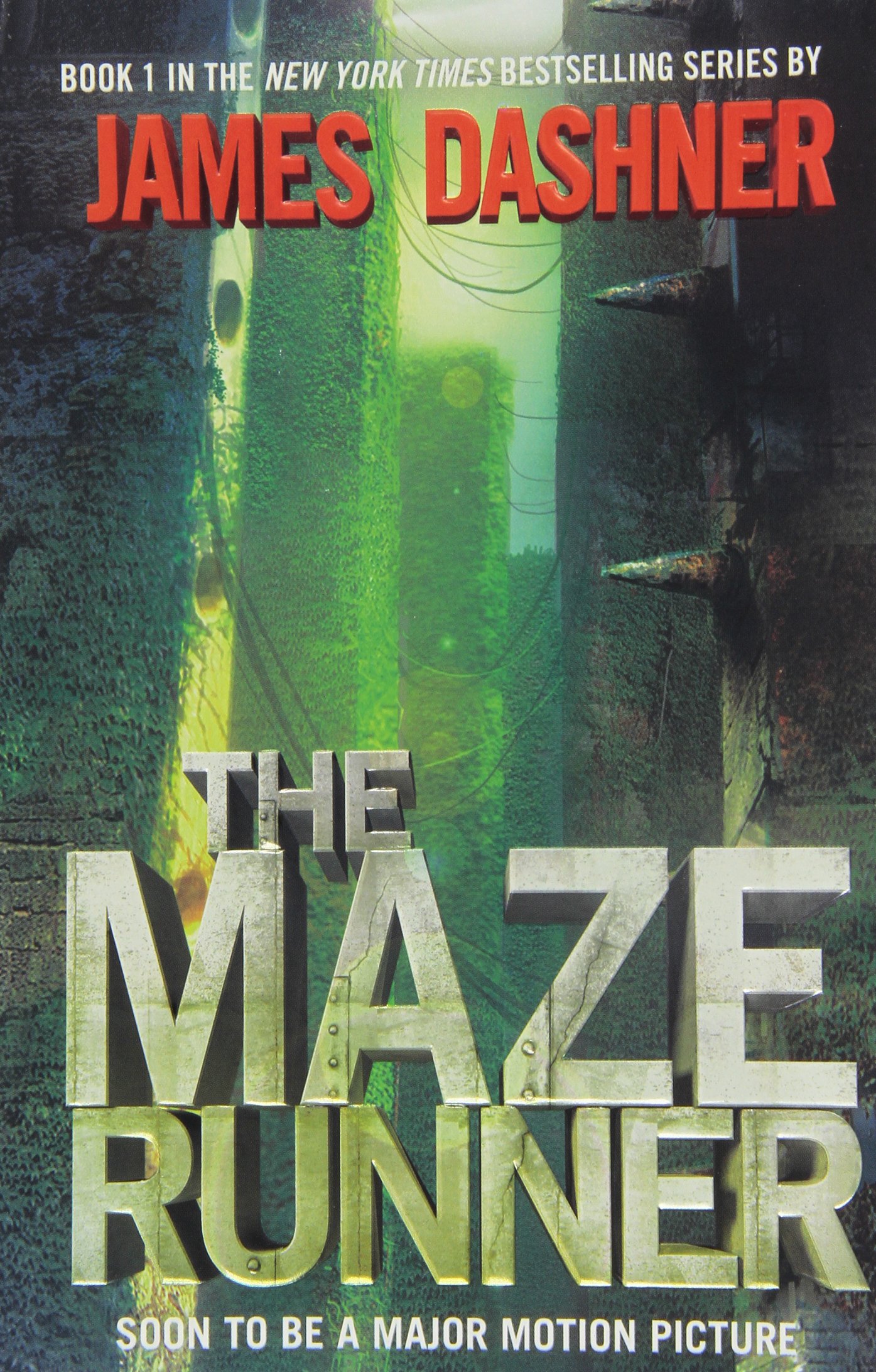
Book 13 -- The Maze Runner by James Dashner

I just can't stay away from YA dystopia!


Context:

Thomas wakes in a service elevator with no memories except his name. He's pulled into the world of The Glade, where other boys work to survive--and to find a way out of the Maze that surrounds them. The Maze is an ever-changing labyrinth teeming with Grievers--half animal, half machine, and completely terrifying. After Thomas joins the Glade, a girl arrives--the first girl ever. She bears a haunting message that will destroy the Glader's way of life.

My Thoughts:

I like creative dystopias. Sorry if this sounds disjointed, I'm writing tired because I really want to get this written tonight. 

Firstly, I really like the way the author sets the scene. He's really good at scenery descriptions. He gets to the point without explicating every tiny flower and blade of grass. I have a hard time imagining scenery but I found imagining the Glade and Maze fairly easy.

His characters are fantastically vivid. Each character feels distinct and genuine. You really get emotionally involved in the characters.  Also: Chuck. :(

I also like that Thomas and Teresa didn't turn into a love story. It's so typical of YA to turn even the dreariest situations into a love story. Though a romance between Thomas and Teresa was hinted at, it was also made very clear that they had far more important things to worry about.  They could barely remember each other. So, I'm really glad there wasn't a played up romance between these two, because that would have broken the mystery and appeal of the world they live in.

I found the plot and story mostly enjoyable. I definitely didn't know what to expect--I really enjoyed the twists and turns the story took. The only things that detracted from it was just...sometimes it felt kind of...disjointed? I dunno, it feels like there's two different stories here. I would have liked it better if the first book ended with the Griever Hole. It leaves too many unanswered questions and kind of creates this weird blended story feeling that I'm not a big fan of. The Glade is a world away from the world they came from. Dashner does make up for it with the haunting letter at the end--I'm definitely interested to read the next book.

Oh and the Grievers were weird to me. I guess I see why they were scared of them, and maybe I'll get it when the movie comes out--but they honestly just didn't freak me out. 

My Rating: 3/5

Overall, I really enjoyed the book. Most of my complaints are small, but a lot of the mark down is simply because the book just didn't grab me. It was a well-written, interesting story, but it didn't really get down deep for me. Maybe it's because it's following Kane & Abel, which is officially one of my new favorite books, and that's a tough act to follow. It didn't feel like a story I would revisit time after time, but Dashner is a great author and I hope to see more work from him.

Wednesday, July 23, 2014

Book 12 -- Kane and Abel by Jeffrey Archer

Have you ever read a book that was so beautifully written, so emotionally gripping, and so painfully realistic that you were in tangible emotional pain after turning the final page?


Context:

Two men, born on the same day in very different circumstances, are fated to cross paths. One, William Kane, is the son of a wealthy banker. The other, Wladek, is born in a Polish forest and experiences the horrors of war first-hand before immigrating to America. Both men fight for a stake in the American dream--but at what cost?

My Thoughts:

Well, I'm an emotional wreck right now, so there's that.

I think I'm going to break it down by characters and themes, because there is a lot of ground to cover in this book. As always, plot destroying spoilers ahead. 

Characters:

I started the book feeling exponentially more sympathetic to Wladek/Abel. Kid goes through some real shit. Frankly, I nearly had to put the book down when his sister was gang raped. The situations Abel finds himself in are horrifying, but treated with the care of an author who has done his history homework and has deep sympathies for injustices to human rights. I was rooting for Abel the whole time, desperate to see him succeed after being beaten, starved, imprisoned, and abused.

Kane on the other hand, I couldn't have cared less about. To me, he was a spoiled little boy, redeemable only by his sheer intelligence. I grew slightly more fond of him during the whole Henry Osborne gold digging fiasco with his mother, but mostly because I finally began to see him as a human instead of the Super Harvard Banking Prodigy. 

And then Archer strikes an incredibly brilliant blow to the reader, and subtly yet definitively flips your sensibilities on their head. Abel's reaction against William in terms of Leroy's death was ridiculous. Knowing Abel's background, it's easy to see why he took the death so hard and needed someone to lash out at. However, letting his friend's death eat away at him and fuel an unfounded hatred for William made me start to dislike Abel. I never reached the point of truly disliking either character, but by the end of the novel I was much more firmly on William's side than Abel's. William only reacted to Abel the way he did because Abel came after him first. They became two petty children squabbling over pride and dollar signs, forgetting something they had both learned earlier in life: the importance of family and love.

Speaking of Harry Osborne, by the way, Archer is a master of secondary characters. When we are first introduced to Osborne, he seems like a one-off guy. He just waltzed in, destroyed William's mother's life, and left. For Archer to weave Osborne back into the story without it seeming forced or plot device-y was truly ingenious. He does this with many other minor characters, especially in the banks. The way they come and go feels realistic. There are certainly coincidences in these characters that link William and Abel, but they don't feel forced. I mean, even the part where Abel saves William on the battle field didn't feel horribly forced. It did feel a little deus ex machina, but it was written beautifully (yet also simply) enough that I was pretty okay with it.

The most obvious of those coincidental interactions (though by no means are these "secondary" characters) is Florentyna and Richard. I was truly impressed with how naturally Archer set up their meeting. He sets it up beforehand so the reader knows it's not weird for rich families to come into contact in New York; recall Abel waiting William's table before Abel comes into his money. This was also an era with fewer people. Anyway, it seemed plausible that Florentyna would be where she was and Richard where he was. Their romance felt true and honest. I will insert a small complaint that both father's enraged reaction to the marriage of their children and subsequent estrangement of those children felt a little too Rom & Jul. I totally understand William shutting Abel down (since Abel did refuse to hear him out years ago), but THESE ARE YOUR CHILDREN WE'RE TALKING ABOUT! Abel's only child and William's only son! I feel like even two people who hated each other as much as they did would begrudgingly attempt to reconcile based on how important these children were to them. 

Overall though, I really loved the characters. Archer does a great job of having a realistically sized cast of characters without overloading the reader with names to remember (I'm looking at you, Robert Jordan). The reader can get into a rhythm of forgetting unimportant, one-off characters but remembering certain names (like Henry Osborne) when they're brought up later. That coupled with the authentic language and history of the novel makes the reader feel like they've taken a trip through time to the early to mid 1900s. 

Themes, History, Writing Style, Etc

Speaking of the history, wow, does Archer know his stuff. He writes convincingly and knowledgeably about a HUGE span of time (1906-1967). So much history happens in that time!! I mean you've got two World Wars, the Great Depression, the Cold War, and all the wars and prisoner camps and stuff going on in Europe. It's amazing to watch Archer carefully place historic events in his characters lives (like William's father perishing on the Titanic), and again, it feels so realistic. It's like you're watching these historical events unfolding in real time as opposed to reading them from a history textbook or learning the facts cold. They feel relevant to the characters and to the reader. 

I also have to throw out there that I love how simply Archer writes. 

Side note: I keep feeling this need to compare him to Robert Jordan, and I think that's because though I love Jordan's "Wheel of Time" series, the things he failed at were performed masterfully by Archer. 

Continuing on. 

Archer has the ability to choose exactly the right words to deliver emotion, realism, and beautiful imagery in the simplest way possible. He never goes overboard with the dialogue and never dumps a sensory overload of scenery. He is always pushing the plot forward. You never feel like you're sitting in one place too long--though I will admit in some of the longer banking scenes, I kind of just wanted it to be over with. It came dangerously close to feeling like jargon-overload (a la "The Girl Who Played with Fire"), but never quite crossed that line. Archer knew when to back off. 

Finally, I just want to discuss how much the ending broke my heart. I'm happy that William and Abel were able to more or less bury the hatchet, but it destroyed my soul that William died just before meeting his extended family. In those last few moments, you really saw William the way he used to be in his prime--after you were done being annoyed with him for being a spoiled child, but before he became a bitter old man consumed with hate and pride. It was done realistically, but also logically--remember my gripe from "Pictures of You," that I didn't get the why of things ending the way they did? Here, you got it. They both finally realized what was really important and shelved their hatred, but not before they broke each other entirely. I think it's good that they both "succeeded"--they destroyed each other's reputations and dreams (William's of retiring and his son taking over, Abel's of being the Ambassador to Poland) and realized how hollow those things felt--because they spent the years after Florentyna and Richard's elopement kindling hate instead of love. They (especially William, who I feel even worse for than Abel because it's not his damn fault this whole stupid feud started anyway--but perhaps it's justifiable because Abel deserves to live with that guilt?) missed out on watching their dearest children create a life together, and their grandchildren's formative years, and for what? 

I was flying through the last 100 pages or so, not going to lie. The climax of the feud came suddenly and it came quickly. I was as astounded as Abel when he returned to accusations of bribery, and I think I gasped aloud when it was revealed that William's successor was the one who sold his 2% to Abel. Damn good story telling, Mr. Archer.

My Rating: 5/5

I truly loved this book. The few moments I pointed out that felt a little out of place weren't enough to detract from how much I enjoyed it. The characters are beautifully written and realistic; the history is seamlessly incorporated and thoroughly researched; the plot is exciting (Archer got me interested in bankers, for the love of God--that's impressive) and fast-paced...there's nothing to hate about this book. I recommend it highly.

Monday, June 30, 2014

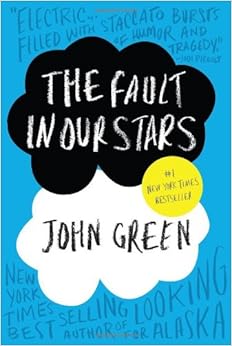
Book 11 -- The Fault in Our Stars by John Green

Nice Shakespeare reference there, John Green. I like it.

Spoilers ahead AS USUAL.


Context:

The Fault in Our Stars is the widely popular YA fiction about Hazel Lancaster, a sixteen year old girl with terminal lung cancer who hates going to her Support Group. That is, until Augustus Waters--an amputee with osteosarcoma--shows up and changes everything.

My Thoughts:

Well, I certainly didn't hate it.

On the good stuff:

I discuss my inability to believe in the characters later, but when they do sound believable, it's really good stuff. I especially like Hazel's reaction to correspondence from her favorite author: "WHAT IS LIFE!?" Someone's been on Tumblr.

I think he does a good job of capturing the pain and reality of cancer. I can't say this with certainty, because the only family member I've lost to cancer lived a state over from me, but it didn't feel like a Lifetime movie, at any rate. I like that he addresses how people are always painted as heroes when they die and how that's kind of bullshit--as if bad people don't die.

The Amsterdam trip was actually quite nice. I liked their little adventures. Very sweet, very emotional and thoughtful. The imagery was really lovely and kind of made me want to go to Amsterdam.

Andddd...the way she took care of him as he died was really sweet. Believable Mature Teenager moment. I felt really bad for Augustus at the gas station. 

Also:

"The world is not a wish-granting factory."

Accurate.

On the bad stuff:

Hazel and Augustus are the same person. The only difference between them is anatomy and Augustus's desire for his death to be a legacy. In that vein, they spout out these ridiculously philosophical quotes and metaphorical theories that are more befitting of the Wise Sage archetype than the Mature Teenager. I truly understand that these kids have been through some life-changing stuff, but going through something world-shaking like cancer doesn't suddenly give you the ability to quote classic literature in daily speech and reference obscure quotes that I, a 24-year-old grad student, have to Google (I'm thinking specifically of "sword of Damocles"--what the hell?). So much of it just sounds like he is trying very hard to wax philosophical and it usually doesn't work for me.

I also don't get the whole "great love" thing. What do they know about each other besides cancer and An Imperial Affliction? Do they ever have a conversation about anything else? I can't think of one.

Also...Van Houten, what the hell? While I liked his character development, the whole "him coming to America" thing was very, very weird and unbelievable to me.


My Rating: 2.5/5

Not an awful book by any means, but not particularly striking for me, either. Not a waste of time, but there are some really flat moments that stink of "trying too hard." Does handle cancer in a believable way, so if you like crying over the human condition, give it a shot.

Sunday, June 8, 2014

Book 10 -- The Body in the Library by Agatha Christie

Did you know that Agatha Christie is the most widely published author in the world, falling just short of Shakespeare and the Bible? Now you know!


Context:

The Bantrys wake to find the body of a young woman in their library. They don't know who she is or why she is there, but when another young girl is murdered nearby, the connection is clear: something foul is at play. Esteemed amateur sleuth and adorable old spinster Miss Marple is brought in by Mrs. Bantry to discover the truth of the situation before her and her husband's reputations are ruined by the affair.

My Thoughts:

I've never been much of a mystery girl, but I really enjoyed this novel.

First, I like the time period. I've always gotten a kick of  late Victorian and early 20th century language--you know, when they used to say "fantastic" to mean something wildly unimaginable, or "gay" to mean happy, and all that kind of stuff. It's also interesting to see how different it was solving crimes Back Then. Today we have television shows like CSI and SVU and other such things that give us ideas about how crime solving works, but they had far less technology in the period Agatha Christie wrote. The character of Miss Marple is something of a Sherlock Holmes, without the ramped up ego and label of Genius. It was interesting to see her suss out the details based on human observation and uncharacteristic cynicism of human nature. I think my fiance would like this book a lot. He prides himself on his observational skills, so I wonder if he'd be able to figure it out. I sure didn't. I was totally wrong.

Though one thing that annoyed me--due to my own personal issues rather than anything wrong with the novel--was Mrs. Bantry's obsession with how people talked about them. It was clearly emphasized how important public opinion was. And I get it. It's totally historically accurate. In today's society, we can afford to be independent and self-important; in the era which Christie wrote and wrote about, communities well and truly depended on each other for everything from employment to reliable professionals (for instance, you wouldn't want the only doctor in your small community to think poorly of you). And sure, some of it was superficial and more about socializing, but socializing was important, and could only be accomplished if certain social etiquette was observed. Nowadays, social etiquette isn't really important, at least not to the degree of propriety it used to be. It's an interesting way of living, but it just irritates me that so much importance had to be placed on other people's opinions.

I also really like Christie's tone. She has a sense of humor that is subtle, and her characters each have a distinct personality that doesn't feel forced or overly structured. There's also a point where she references herself--a young boy claims he has autographs from many mystery authors, and the boy names Christie as one of them. Teehee.

I also like her obvious feminism. Considering the book was published in 1942, it was rather daring of her to have so many women at the forefront of her novel. The detective who solves the crime is a woman; one of the murderers is a woman; the victims are women; and in fact, quite a number of the supporting cast are women. Each of these women is a character who would pass a novel version of the Bechdel test. I applaud your progressive stance, Agatha Christie!

The actual story was wonderful. I read this book in a day. I was fascinated by the storyline, and remember earlier in my blog when I mentioned how not many authors can pull off a twist without it feeling unoriginal or forced? Well, Christie is apparently the Mother of the Surprise Ending; I didn't expect her ending at all, and it didn't feel contrived, scripted, or forced in any way. She had me guessing from the get-go, and I loved every minute of it. Marple felt real;  unlike the well-loved Sherlock Holmes, whom we are supposed to simply accept as a savant, Marple is simply an old lady with a keen eye for detail and a cynical view of human nature. 

My Rating: 4.5/5

An extremely well written novel with believable characters, an intriguing plot, and a great pace. There's no real identifiable reason why I didn't quite feel this novel was a five; simply a feeling I had where I was intrigued, but not grabbed. I wasn't hooked, maybe because there wasn't a lot of action. It was mostly dialogue and descriptions of action. Perhaps if we could have seen one of the murders in action, cloaked in anonymity, it would have grabbed me more. 

Saturday, June 7, 2014

Book 9 -- Pictures of You by Caroline Leavitt

This was an adventure outside of my usual reading comfort zone. So let's hop to it!


Context:

Isabelle is running from her imploding marriage when she crashes her car into a woman who is running away as well. Isabelle must come to terms with what the accident does to her life, and simultaneously becomes entangled with the lives of the surviving husband and son.

My Thoughts:

At first, I didn't really care for this novel. I honestly felt like I was reading a cheesy country song (no offense, country music--I grew up on you and I love you dearly) for a little while. And the characters were infuriating. Maybe it wouldn't have been so maddening if the novel wasn't third person omniscient. At any rate, it's annoying to me that Charlie knows that April is a free spirit, acknowledges that she acts flighty and disconnected and likes to take random road trips, and then gets all confused when he doesn't keep the romantic spark alive and smothers her with suburban American life and she runs away. Well, duh.

I also felt really frustrated with the way things turned out. See, I'm a bit picky and weird and don't make a lot of sense. I really enjoy endings that break free from the norms (as in, not everything is a happy ending), but I still want the happy lovey romance stuff to work out in the end. So on the one hand, I'm happy that it was more realistic and it wasn't like "And Isabelle and Charlie lived happily ever after!" But it was also so obvious that Charlie and Isabelle always loved each other and that they settled with the people they ended up with. Excuses about Sam be damned, they could have made their way back to each other at some point. Or Charlie could have, you know, not been an ass and tried the whole long distance thing until Sam was stronger.

I don't know, I guess this is why I don't read romantic dramas a lot. I realize the novel is realistic in many aspects, and I do appreciate that, but I also craved something more for Isabelle and Charlie. I tried to be understanding of Isabelle's paranoia and clinginess, and of Charlie's wishy-washy, one foot in one foot out crap, but I just wanted to slap both of them.

Oh, and the final reveal about April--equal parts surprising and unsurprising. Like on the one hand, we already knew she wasn't planning on taking Sam with her, but to really know for sure that she was planning on leaving her family behind...yeah April was established as impulsive and flaky but to abandon your kid? Seriously lady? Getting the story from Bill was a nice surprise, and much needed closure. 

I did enjoy getting a POV from Sam, and it was really great when he finally realized his mother was really, truly dead. Such an emotional scene. I also enjoyed that the closing chapter of the novel was from an adult Sam's POV. I'm glad he got closure with Isabelle. 

Some of the themes were slap you in the face obvious, but the author has a really great style of writing, so despite the fact that I could see right through most of the metaphors, illusions, and themes, it didn't bother me too much because her beautiful writing eased me through it. 

My Rating: 3/5

A surprising read that takes a while to warm up to, Pictures of You explores some interesting themes and offers a creative, interesting story that actually feels fresh. If you're not a fan of romantic dramas, it may be hard to believe in the story, but the author's well-written characters and beautiful dialogue help ease the process along so that it doesn't feel like a Fabio-emblazoned stereotype.

Book 8 -- The Giver by Lois Lowry

I read this book in elementary school, and I don't think I really grasped it back then. So I re-read it in anticipation of the oncoming movie (which looks awful, by the way).


Context:

Jonas lives in the perfect world. Spouses and careers are hand-picked for each person; there is no war, pain, fear, or emotion whatsoever. However, when Jonas is selected to be the Receiver of Memory--a rare, prestigious honor--he learns that there used to be more to the world than his daily routine. 

My Thoughts:

Okay now I remember why I thought of this book when I read Divergent: the age ceremonies! Of course, the age ceremonies are more about assignments and the Choosing Ceremony is about choice, but still.

So anyways, I just really really love this book so much. 

I love how it's not your typical dystopian novel. Things are bad without being bad. Jonas doesn't even realize what a controlled world he's living in until he receives memories from the Giver. And this leads to an interesting discussion and moral conundrum: should people be allowed to make choices? What is the inherent value of these choices? This is something Jonas struggles immensely with and something I think would be fun to introduce into a classroom. 

On the one hand, you can't miss what you don't know. So Jonas's friends and family live in a world without love, color, music, weather, or career options--is that really so bad? As readers, we balk at the idea of someone taking away our emotions and the nuances of life--but only because we are so spoiled by them. They also have no heartbreak, no pain, no lies, no war, no illness. What's so wrong with that? Jonas would have lived a perfectly content life, never knowing any different had he not been selected as the Receiver of Memory.

And then, of course...we know that pain is what makes us human. Our ability to process and experience emotions and experiences and change based on what we learned is key to our identities. Without some sense of personal relevance, we are nothing more than robots. What is even the point of life if we all continue on the same structured, bland, neutralized path planned out by someone with our "best interests" in mind? Even if our choices end up being destructive, shouldn't we have the right to make those choices?

DO YOU SEE HOW FASCINATING THIS BOOK IS YET?

I just wish we had more back story. How did Jonas's world come to be this way? How many communities like Jonas's are there? Are there other communities with different rules? Is there still war and all those other things Jonas received memories of, and they're just sheltered from it somehow (much in the same way Chicago was a pocket unto itself in Divergent)? 

And the whole ending is just so freaking sad. I know Lowry has released sequel novels to The Giver that kind of explain what happens, but before that, the ending was just a huge question mark. Does Jonas and the baby die? I always thought they kind of did, because it was just so convenient how they 'stumbled' upon the exact scenario from Jonas's first memory. 

This is a very short book, but it's slammed full of interesting themes and fantastically written scenes. 

My Rating: 5/5

Hands down one of my favorite books I've ever read. The plot makes sense, the characters feel very real, and I love that it's a dystopian with a utopian face. Lowry creates an incredibly imaginative world that makes the reader question everything they know about the human experience. This is a book that will make you feel and think, and will leave a lasting impression on you.